The First Three Metres: Indoor Kit That Keeps Domestic Jobs Clean
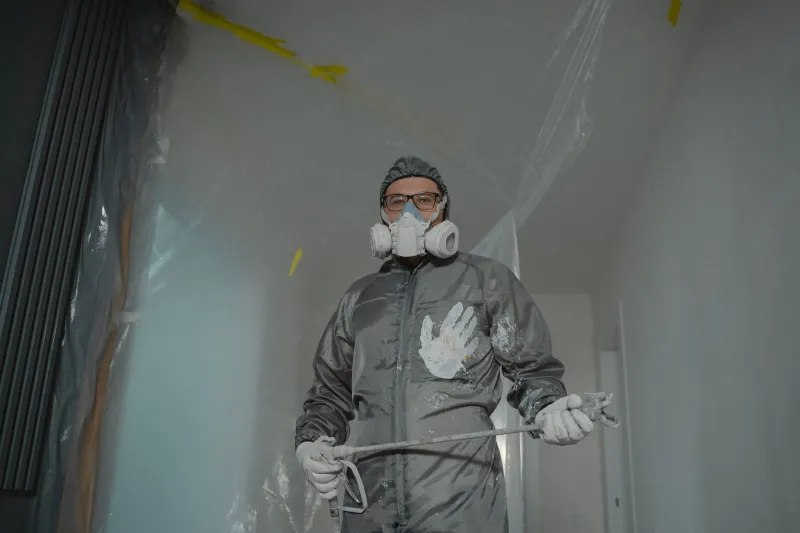
There is a moment on every domestic job when the customer looks at your boots, then at the carpet, then back at your boots. It lasts about half a second. In that half second, they decide whether you are the sort of trade who thinks about their home or the sort who thinks about getting out before teatime.
That is the hallway test. It is not about being fussy. It is about showing up prepared. And for trade counters, it is one of the easiest ranges to stock well, because the kit is small, repeatable and usually bought at the last minute by someone who has just realised the job is indoors.
The first three metres matter most
Most domestic call-outs involve a short walk from the van to the work area. That walk is where mess happens. Grit comes in on boots, dust travels on tool bags, and a wet day turns a tidy hallway into a mud map. The first three metres are the bit the customer sees first and remembers longest.
A floor runner is the obvious starting point. Not a giant roll of polythene that flaps about, but a proper reusable runner with a bit of weight and grip. The sort you can lay from the front door to the bottom of the stairs in under a minute. Stock a couple of widths and lengths, and keep one opened on the shelf so people can see how it folds.
Dust sheets are the next line. Cotton twill sheets still earn their place because they stay where they are put and do not rustle every time someone walks past. Plastic sheets have their uses, especially for messy prep, but a cotton sheet feels more considerate in a lived-in home. It says you are protecting the room, not wrapping it in a bin bag.
Shoe covers are not a gimmick
Reusable shoe covers divide opinion. Some trades love them. Some think they are a fuss. The honest answer is that they work when they are easy to reach and easy to clean. A box of disposable covers by the counter is fine, but a reusable pair that lives in the van door pocket is better. It gets used.
At the counter, the plain-language sell is simple: 'If you are in and out of a customer's house all day, these save you taking your boots off every time.' That is it. No lecture about contamination. No grand claims. Just a practical reason to spend a few quid.
Look for covers with a decent sole and a cuff that stays up. The cheap ones split at the heel after a week. The better ones can be rinsed and left to dry. Keep a small display pair near the till, because they are an add-on, not a destination purchase.
A clean-base bag is a quiet upgrade
Tool bags are not usually sold as indoor kit, but they should be. A bag with a solid base and a wipe-clean bottom stops grit and dust from migrating onto the customer's floor every time you set it down. It also keeps the bag itself in better nick, which matters if you are carrying it through a finished room.
On the shelf, group a clean-base bag with the runners and sheets rather than leaving it in the general tool storage aisle. The story writes itself: everything here is for working in someone's home without leaving a trail.
Compact extraction earns its space
Dust extraction is often seen as a big-ticket item, but the small accessories are what actually make it useful on domestic jobs. A compact hose, a floor nozzle and a few adaptors can turn a site vacuum into something you can use in a hallway without dragging a metre-wide machine through the front door.
Stock the accessories next to the sheets and covers. Not because they are the same thing, but because they solve the same problem: keeping the customer's home clean while you work. A trade buying a runner will often add a nozzle if it is within arm's reach and the price is clear.
Merchandising the indoor kit range
This range works best as a small, self-contained bay rather than scattered across the shop. A four-foot section is enough. Top shelf for shoe covers and small accessories. Middle shelf for dust sheets and runners, folded and labelled. Bottom shelf for bags and extraction attachments.
Use plain signs. 'Indoor job kit' is better than 'surface protection solutions'. A short line under the heading does the selling: 'For work inside customers' homes. Lay it down, pack it up, take it with you.'
Keep one runner out of its packaging so people can feel the backing. Keep a dust sheet folded on the shelf so they can see the size. Put a pair of shoe covers on a small hook beside the till. Small touches like that make the range feel practical rather than precious.
Counter language that works
The best conversations about indoor kit are short. Most customers do not want a sustainability speech. They want to know whether it will save them time, save them a complaint, or save them from taking their boots off ten times a day.
Try: 'This lot is for when the job is inside a house rather than on a site. Runner for the hall, sheet for the room, covers for your boots. It all folds down into the van.'
That is the whole pitch. It respects the customer's home and the trade's time. And it gives the counter a reason to stock a small range that sells steadily all year, not just in the run-up to a busy season.
The hallway test is not about being over-prepared. It is about being ready for the first three metres. Get that right and the rest of the job starts on the front foot.