A Plaster Before a Problem: First-Aid Stock That Earns Counter Space
Most trade counters have a first-aid box somewhere. It’s usually behind the till, under a pile of seasonal catalogues, and contains three plasters, a pair of gloves that have gone brittle, and a leaflet from 2019. That’s not a system. It’s a hiding place.
The better approach is to treat first-aid lines like any other consumable: small, fast-moving, and bought at the point of need. Not a full medical catalogue. Not a wall of kits. Just the odds and ends that stop a minor knock from turning into a lost afternoon.
Start with the incident, not the catalogue
Walk around a UK site for ten minutes and you’ll see the same handful of things happen. A blade slips. A splinter goes in. Grit finds an eye. A heat gun or soldering iron catches a knuckle. Someone knocks a shin on a scaffold tube. Dust and plaster dry out hands until they crack.
The right range follows those incidents, not the wholesaler’s A–Z. A joinery workshop needs different fast movers from a landscaping gang. An electrical contractor will get through more eye wash and small dressings than a general builder. A plumbing merchant might hardly touch burn gel until winter, when everyone’s soldering in a cold garage.
So range by site type. Ask three regulars what they actually reach for. You’ll get a shorter list than you expect, and it will be more useful than any pre-packed kit.
The small-stop core
For most trade counters, the useful core is deliberately modest:
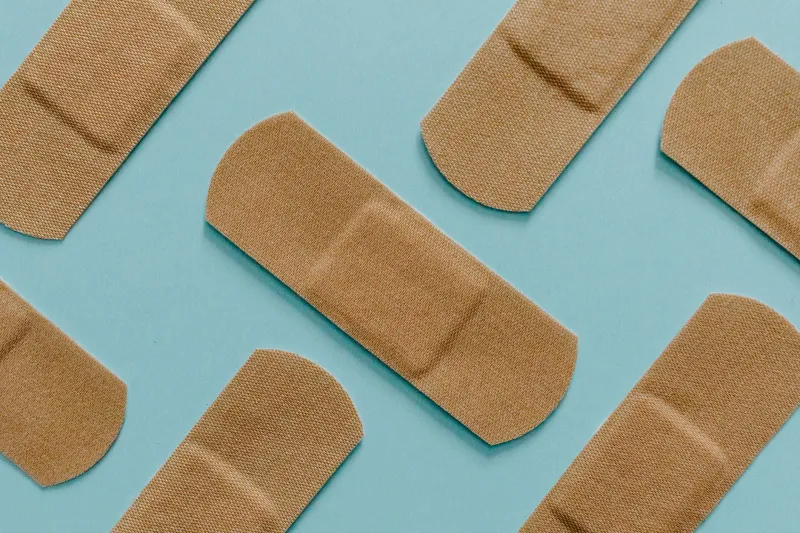
- Adhesive plasters in two sizes — fingertip and standard strip. Not a tin of fifty novelty shapes.
- Sterile dressings in a couple of sizes for bigger grazes and cuts.
- Microporous tape and a small pair of scissors. Tape gets used for everything.
- Eye wash pods — 20ml saline pods are the practical counter line. Add a 500ml bottle for sites that need a proper station.
- Burn gel sachets or a small burn dressing. One or two lines, clearly dated.
- Nitrile gloves in the sizes your customers actually wear. A box of medium is not a range.
- Instant cold packs for knocks and swelling.
- Saline wipes and a small sting-relief line in summer.
The principle is “small-stop”: sell a single plaster, a two-pack, a handful of pods. Someone with a cut hand does not want to buy a 100-box of plasters and carry it around all day. They want the smallest pack that solves the next hour. That’s the gap a trade counter fills better than a pharmacy or a supermarket.
Put it where the problem happens
First-aid stock hides because it’s merchandised like a compliance item. Move it into the grab zone instead — the counter-adjacent space at eye level where people already queue, chat, and pay.
Label by injury, not by brand. “Cuts”, “Eyes”, “Burns”, “Gloves”. A customer with grit in their eye doesn’t want to read six product names. They want the word “eyes” and a price.
Keep prices visible and per unit. A pod at 60p is an easy yes. A pod behind a handwritten sign saying “ask at counter” is a no. If you can, keep a small open display of the packaging, not the product itself — hygiene matters, and nobody wants to buy from a torn box.
A simple card reading “Take one, tell us” works surprisingly well. It turns the display into a honesty line and gives you a replenishment signal at the same time.
Replenishment rules that hold
First-aid lines fail in two directions: they run out quietly, or they sit until the expiry date. Both are fixed with a boring weekly habit.
Use a two-bin or min/max system. Keep the display bin and one back-up. When the display is down to the last two or three, refill from the back-up and write it on the order pad. Check on the same day each week — Friday afternoon is as good as any — and do a quick expiry sweep once a month. Dates on burn gel and eye wash matter more than dates on plasters, but all of it should be legible.
Don’t over-order on the back of one busy week. First aid is a steady dribble, not a seasonal spike. Winter brings more dry hands and knocks in the cold; summer brings more eye irritation and sting relief. Adjust by a line or two, not by a pallet.
What to leave out
Large pre-packed kits look reassuring and sell badly at a trade counter. They’re often bought once by a site manager and never replaced. Obscure lines — specialist dressings, unusual sizes, anything with a brand name nobody recognises — take up space and confuse the display. And anything without a price is a conversation, not a sale.
You’re not trying to be a pharmacy. You’re trying to be the place where a bloke with a cut finger can grab a plaster, a couple of pods, and get back to the job. That’s a modest margin, but it’s a repeat one — and it builds the kind of counter habit that brings people back for the bigger stuff.
The return test
If a first-aid line comes back unopened, the pack was wrong or the price was. If it walks, it’s earning its space. If nobody touches it for 90 days, cut it and give the space to something that moves.
Keep the range small, the display honest, and the refill boringly regular. A plaster before a problem is worth more than a perfect kit nobody can find.