Your First Salesperson Doesn't Speak: Getting Shelf-Edge Labels Right
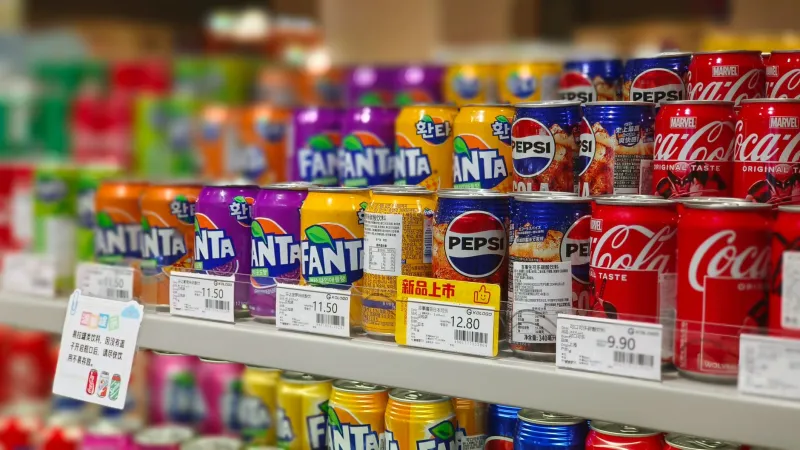
You can learn a lot about a trade counter from its shelf edge. If the card says £7.99 and nothing else, the customer has to guess. They guess the pack size, they guess whether it fits the fitting they already own, and they guess whether they can bring it back if it's wrong. Sometimes they guess right. Often they don't. Either way, someone at the counter ends up answering a question that a small piece of card could have answered first.
That's the case for shelf-edge signage, but not the usual one. This isn't about making the shelf look busy or filling space with brand logos. It's about putting the four things a trade customer actually needs — pack size, unit price, compatibility and return terms — where their eyes already are. Get that right and the label becomes your first salesperson. It doesn't speak, but it does answer.
The label is part of the product
In a trade environment, a product is rarely just the thing in the box. It's the thing plus the information that decides whether it goes in the van. A plumber picking up a pack of elbows wants to know how many are in the bag, what they fit, and whether the merchant will take them back if the job changes. If that information is on the shelf edge, the decision is quick. If it's not, the decision becomes a conversation.
Conversations aren't bad. But the same conversation, twenty times a day, is a cost. It slows the counter, it puts pressure on whoever is serving, and it makes it more likely that a customer picks the wrong line because they couldn't be bothered to ask. The label is the cheapest way to reduce that friction.
Four answers, one card
A useful shelf-edge card doesn't need to be clever. It needs to be complete. For most trade lines, four pieces of information do the heavy lifting.
- Pack size. How many, how much, or how long. Not just the trade name. 'Box of 100' is more useful than 'Trade Pack'.
- Unit price. Where it makes sense, show the price per item, per metre or per 100. It helps customers compare lines without doing maths on their phone.
- Compatibility. What it fits, what it replaces, what it doesn't. This is the one most often missing, and the one that causes the most returns.
- Return terms. A simple line — 'return within 30 days, unopened' or 'special order, non-returnable' — saves an argument later.
You don't need all four on every card. A bag of screws might only need pack size and unit price. A specialist fitting might need compatibility more than anything else. But the card should be designed to carry them, so the person printing it doesn't have to reinvent the layout every time.
A simple template that holds up
The best label template is the one your team will actually use. Ours is deliberately plain: a header with the product name, a bold pack size line, a small compatibility line, a unit price, and a returns line at the bottom. Nothing fancy. It fits a standard shelf-edge holder and it can be printed in-house.
If you're building one, start with the questions your counter hears most. Write them down for a week. You'll see a pattern: 'How many in a box?', 'Will this fit a 15mm pipe?', 'Can I bring it back?'. Those become your template fields. The label stops being decoration and starts being a reply.
The ten-minute audit
You don't need a full range review to make progress. Pick one bay — the one that generates the most questions — and spend ten minutes on it. Here's how.
- Stand where the customer stands. Look at the shelf edge, not the product. Can you read the pack size without picking anything up? If not, the card is too small or too cluttered.
- Check the first question. For each line, ask what a customer would need to know before buying. If it isn't on the card, write it down.
- Look for missing compatibility. Any line that fits something else should say so. A simple 'fits X' or 'replaces Y' is enough.
- Price the unit. Pick three lines and work out the unit price. If it's not obvious from the card, add it.
- Read the return line. If it's unclear or missing, fix it. A customer who knows the terms is less likely to argue about them later.
Ten minutes won't fix the whole counter. But it will show you where the labels are failing, and it gives you a repeatable routine you can run bay by bay.
What to do with the cards that fail
Some labels are beyond saving. They're faded, the product has changed, or the information is wrong. Take them out. A wrong label is worse than no label because it teaches customers not to trust the shelf edge.
Replace them with the template, print a batch, and keep a few blanks behind the counter. When a new line comes in, the card gets filled out before the product goes on the shelf. That sounds obvious, but it's the step most counters skip when they're busy. The result is a shelf that looks stocked but doesn't answer.
The label is stock, too
At J&S Products we spend a lot of time thinking about what goes on the shelf. The label is part of that. It's not glamorous, and it won't sell itself. But a clear card reduces the questions, the wrong picks and the returns that eat into a trade counter's day.
Start with one bay. Write the four answers. Print the card. Then watch how many times you get asked the same thing. If the number drops, you've found a system worth keeping.