Mud on the Mat, Not on the Floor: A Practical Entrance Kit for Winter Trade Counters

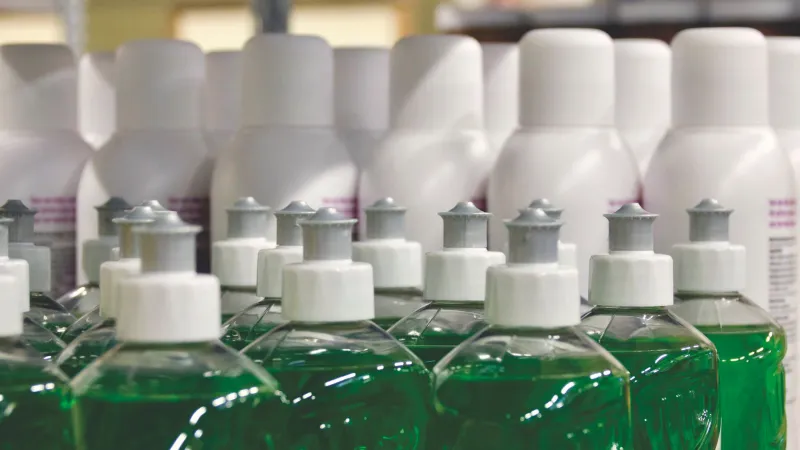
Photo: Mike Pennington , CC BY-SA 2.0, via Wikimedia Commons
There is a moment in every UK trade counter when winter arrives properly. Not the first frost, and not the first Christmas display, but the first morning when three customers walk in with wet boots, a van driver trails in half a yard of wet tarmac, and someone puts a wet-floor sign out ten minutes after the floor has already turned into a skating rink.
The entrance is the first thing customers meet, and in wet weather it is also the first thing that can go wrong. A sensible entrance kit is not about turning the doorway into a showroom. It is about slowing the water down, giving people somewhere safe to stand, and making the clean-up quick enough that nobody has to choose between serving and mopping.
Start at the threshold, not the till
The most common mistake is treating entrance matting as one product. It is really two jobs: scraping heavy dirt and water off the soles, then absorbing what is left. A single thin mat at the door does neither job well once the rain sets in.
Think in zones. Outside, or immediately inside the door where there is room, you want a scraper mat with a coarse surface, ribs or bristles that knock the worst of the muck off. Just beyond that, an absorbent mat should catch the finer moisture. Putting an absorbent mat outside is usually a waste; it will soak up the weather rather than the boot.
Placement matters as much as the mat itself. Mats should lie flat, with no curled corners and no loose edges for a boot to catch. If the entrance is busy, a mat that shifts underfoot is worse than no mat at all. Edge trim or a proper mat well is worth considering where traffic is heavy, and a spare mat in the back is useful when the front one needs drying out.
Scraper first, absorber second
For a trade counter, the scraper mat does the heavy lifting. Look for a robust backing, a surface that will not flatten after a fortnight, and a size that covers the main walking line rather than a decorative patch by the door. Ribbed rubber and bristle-style matting are both common for this job; the right choice depends on whether the entrance is mostly foot traffic or whether trolleys and sack trucks come through.
Absorbent matting should sit where boots have already shed the worst of the water. Microfibre and cotton-rich mats are the usual options. The practical question is not which one looks smarter, but whether it can be picked up, dried and put back without falling apart. A mat that stays damp for days will start to smell and will stop absorbing properly.
Avoid the temptation to buy one very large mat and call it done. Long, narrow entrance runs often work better than a single square, because they follow the path people actually take. If the door opens onto a slope or a tight turn, measure first and buy for that shape. A mat that rucks up against the door is a trip hazard with a useful-looking label.
Signage is a habit, not an ornament
Wet-floor signs are often bought, put by the door and then left there until they become part of the furniture. That is not a system. The useful habit is to put the sign out when the floor is actually wet, move it as the wet patch moves, and take it in when the floor is dry. A sign that is always out teaches customers to ignore it.
Keep at least two signs for a busy entrance, so one can be at each end of the wet run. A-frame signs are the usual choice because they are visible and easy to move. Check that they sit flat and do not wobble. In a trade counter, people are often carrying boxes or looking at a phone; the last thing they need is a sign that adds to the obstacle course.
It also helps to give staff a simple rule: if the rain starts, the sign goes out before the first customer comes in, not after the first near-miss. That is a small operational change, but it is the difference between reacting to a wet floor and managing it.
Containment kit behind the door
Matting and signs do most of the work, but a few containment lines make the entrance easier to run. Boot trays are useful for customers who want to step out of muddy footwear or for staff changing between yard and counter. A drip tray or shallow containment tray can sit under wet umbrellas or leaking deliveries. A small umbrella stand, if the entrance has space, keeps wet canopy fabric off the floor instead of draped over a display.
Behind the scenes, keep a microfibre mop, a floor squeegee and a small bin or bucket within easy reach. Absorbent socks or floor pads are handy for a leak that appears during the day, but they should not replace a proper clean-up. The aim is to deal with the small stuff quickly so it does not become a bigger slip risk later.
What deserves shelf space
For a trade counter selling to other businesses, the entrance range should be short and obvious. A scraper mat, an absorbent mat, edge trim, two wet-floor signs, a boot tray and a basic mop or squeegee cover most of the demand. Add absorbent socks or pads if customers ask for them, but do not build a wall of near-identical mats in the hope that choice equals value.
Display the kit together, near the door or at the end of an aisle, so the connection is clear. A simple sign saying what each mat is for will do more than a stack of boxes with tiny labels. If staff can explain the difference between scraping and absorbing in one sentence, the range is doing its job.
As we head through late 2026, the sensible move is to check entrance stock before the next cold snap rather than after the first flood of muddy boots. Reorder the core lines, replace any mat that has curled or gone bald, and make sure the signs are where staff can find them. The first step into the shop should be a sale, not a slide.
At J&S Products, the test for entrance kit is the same as for any practical line: does it earn its space by solving a real problem on a wet Tuesday? If it does, it belongs by the door.